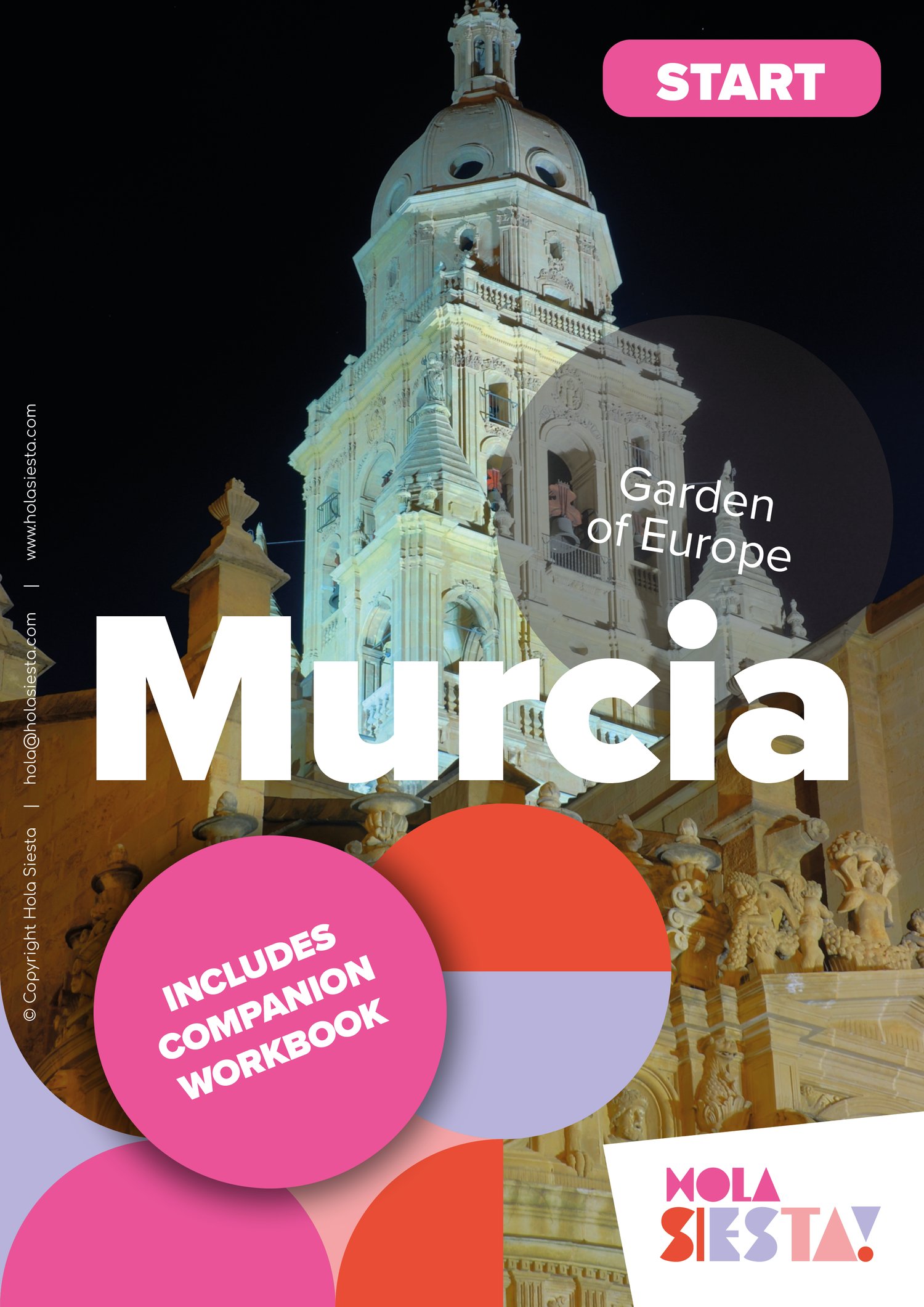
Murcia: Garden of Europe
More sunshine than anywhere else in Spain. Lower prices than almost anywhere in Europe. And considerably more depth than either fact suggests.
Murcia sits in the southeast corner of Spain, tucked between Andalucía, Valencia, and the Mediterranean, and it appears in sunshine statistics more often than it appears in serious expat conversation. That imbalance is worth correcting.
The Region of Murcia offers genuine Mediterranean living at prices that have largely resisted the inflation affecting the Costa Blanca and the Costa del Sol. The city of Murcia is a proper Spanish university city of 450,000 people, with a cultural life, a food scene, and an urban energy that first-time visitors consistently underestimate. The Mar Menor is one of Europe’s largest saltwater lagoons, and the coastline beyond it ranges from busy resort towns to stretches that remain largely undeveloped. The interior — the Guadalentín valley, the Sierra Espuña, the agricultural heartland — is a different world entirely.
Your Free Companion Workbook — Included With This Book
This book includes a free companion workbook — a fillable and printable PDF with reflection prompts, checklists, planning tables, and a personal action plan built around the chapters you’re reading. You'll find the link and a QR code after the Table of Contents.
This book covers all of it honestly: the appeal and the limitations, the city and the coast and the interior, the local culture and the social character, and the practical information needed to integrate into a region that is warmer in manner as well as temperature than its neighbours often receive credit for.
Inside this book:
- Murcian identity: the regional pride, the relationship with neighbouring Valencia and Andalucía, and the local character that shapes integration
- Murcia city in depth: the cathedral, the university, the tapas culture, the neighbourhoods — a city that consistently surprises
- The coast: Mar Menor, Águilas, Mazarrón, Cartagena — the honest differences between the region’s very different coastal options
- The interior: the fertile huerta, the Sierra Espuña, and the agricultural communities that form the region’s quieter heart
- Language: Murcian Spanish with its own accent and a few local expressions worth knowing
- Food culture: zarangollo, caldero, the huerta vegetable tradition, and a local food culture of genuine quality
- Property, healthcare, and practical integration across a region of real contrasts
Murcia is a practical choice that turns out to be an emotional one. This book gives you both sides of it.